Biocracked
←

#metabolic syndrome

2 articles
Approach 1, macro science, with palette D, a bold color field.

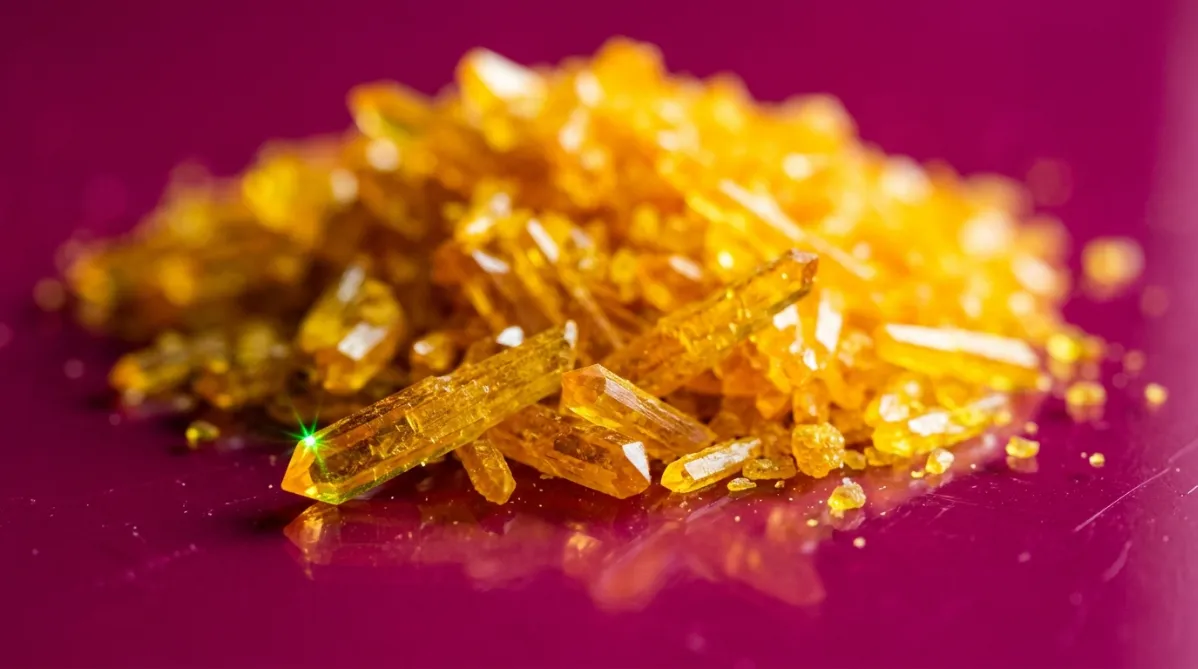
Extreme close-up photograph of raw berberine crystals, a vivid saturated yellow-orange powder of needle-like crystalline shards, heaped in a small mound on a glossy deep magenta acrylic surface. A few individual crystals are in sharp focus in the foreground, showing their faceted, translucent edges, with the rest of the pile softly blurred behind. Camera is low, about 20 degrees above the surface, with a shallow macro depth of field. Lighting is a single soft studio key from the upper left, with a crisp highlight along the crystal edges and a gentle magenta reflection beneath the mound. One tiny electric green glint of reflected light sits on a crystal tip. The mood is vivid, precise and slightly provocative, with a clear contrast between the yellow subject and the magenta field. There is no text anywhere in the frame.
supplements

¿Ozempic natural? La berberina ganó 6 de 6 pruebas de lípidos – con una advertencia

BY NOVA CHEN ·

En las redes sociales la berberina se promociona como el “Ozempic natural”, pero ¿qué revela la ciencia? Una revisión de 2025 que agrupó 54 revisiones sistemáticas sobre 70 resultados de salud mostró mejoras en los 6 de 6 indicadores de colesterol y en el 93 % de los parámetros de diabetes tipo 2. La obesidad resultó ser su punto débil, y 45 de las 54 revisiones fueron calificadas de muy baja calidad. Aquí tienes un resumen de la evidencia, las dosis habituales y quién debería evitarla.
Approach: Macro science. Palette: D, bold color field.

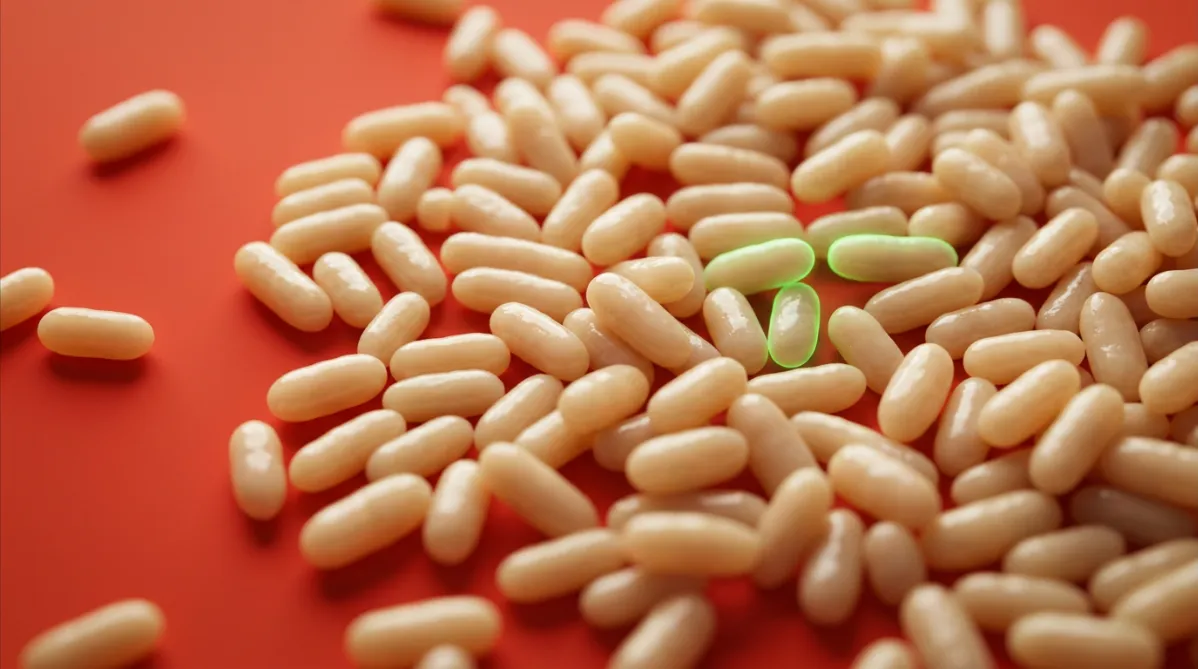
Extreme close-up microscopy-style image of a dense cluster of oval, rod-shaped bacteria with a slightly mucous, glossy membrane texture, shot from a shallow top-down angle with a razor-thin focal plane. Most of the colony sits in the sharp center, softening into creamy blur at the edges. The cells are warm ivory with subtle translucent depth, resting on a saturated tomato-red backdrop. A scattering of sparser, isolated cells on one side suggests "low baseline" and hints at the subgroup story. One or two cells carry a faint electric green (#00e676) fluorescent rim glow. Lighting is soft, directional studio light with gentle specular highlights on the cell walls and clean shadows in warm red tones. Mood: curious, precise, quietly skeptical, with a vivid but grounded look. No text and no blue cast.
supplements

Akkermansia falló en su objetivo principal, salvo en personas con escasez de ella

BY NOVA CHEN ·

Una bacteria intestinal pasteurizada, frecuentemente anunciada como un “potenciador natural de GLP‑1”, acaba de someterse a un ensayo clínico doble ciego con 142 participantes y no alcanzó su objetivo primario de mejorar la sensibilidad a la insulina. Sin embargo, los análisis exploratorios mostraron un aumento del GLP‑1 tras la carga glucémica y que los sujetos con bajos niveles basales de Akkermansia presentaron mejor sensibilidad a la insulina y menos grasa troncal. Estos hallazgos de subgrupos generan hipótesis, están justo en el umbral de significación y provienen de un estudio con fuerte participación industrial. Aquí se describe lo que los datos revelan, lo que no demuestran y a quién podrían interesar.

This page is available in